
If your boiler stopped working, run these three checks before calling anyone: pressure gauge (should read 1–2 bar when cold), thermostat (should be set above room temperature), and the pilot light or error code display. These fixes resolve the majority of cases where a boiler appears to have stopped without any fault in the system. Roostis a UK home admin app that lets you store your boiler details, cover policy, and engineer contacts so you're not searching for them at 8pm in January.
7 checks to run when your boiler stopped working
Most cases where a boiler has stopped working are not faults; they are recoverable states the boiler entered because something changed: low pressure, a thermostat adjustment, a power blip, or a frozen pipe. Going through these seven checks in order takes less than ten minutes and fixes a large proportion of callouts before the engineer arrives.
None of the checks below require any tools or technical knowledge. They are the same steps a Gas Safe engineer will ask you to try on the phone before attending.
Check 1: Boiler pressure
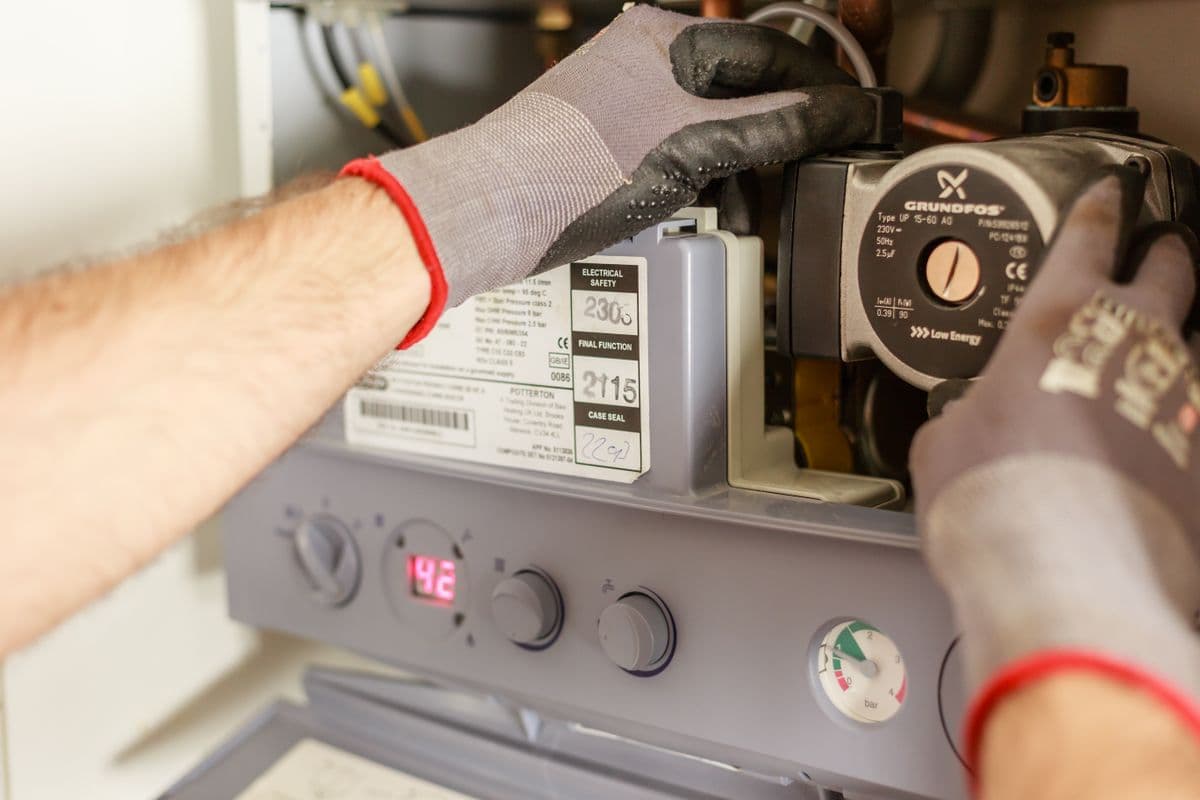
Low pressure is the most common reason a boiler stopped working and the easiest to fix yourself. Look at the pressure gauge on the front of the boiler. It should read between 1 and 2 bar when cold. Most gauges have a green zone for the correct range.
If the needle is below 1 bar, or in the red zone, the boiler has lost pressure and shut itself off. This is a safety feature, not a fault. You can repressurise the boiler using the filling loop (a small valve or hose, usually beneath the boiler) following the instructions on the casing or in the manual.
The process varies slightly by boiler make and model, but generally involves opening the filling loop valve until the pressure reaches 1.5 bar, then closing it again. If you cannot find the instructions, search your boiler make and model online. Most manufacturers publish PDF manuals.
If the pressure drops again within a few days, there is a slow leak somewhere in the system. That does require an engineer, but repressurising will restore heating while you book one.
Check 2: Thermostat settings
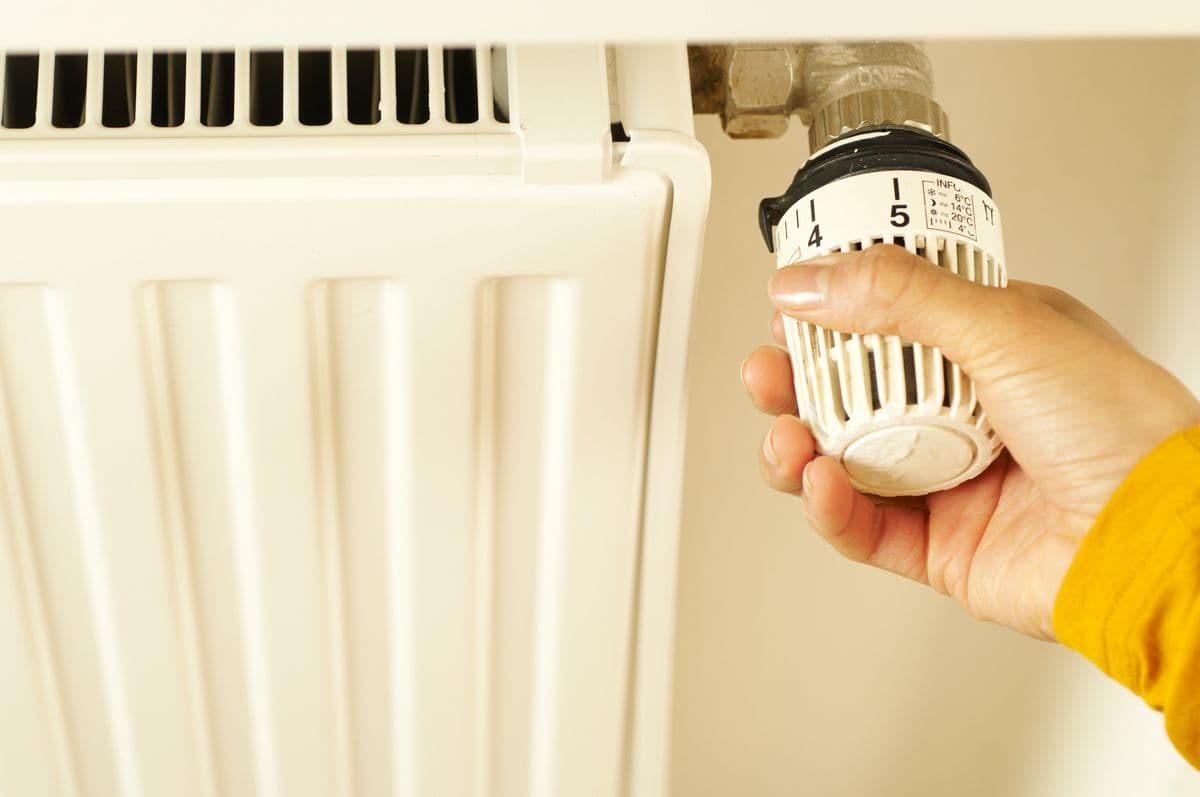
Before concluding your boiler stopped working, confirm that the thermostat is turned on and set to a temperature above the current room temperature. The boiler will not fire if the thermostat is satisfied, meaning the room is already at or above the set temperature, because it has no reason to.
If you have a smart thermostat (Hive, Nest, tado), check the app as well as the physical unit. Smart thermostats sometimes enter frost protection mode or lose their schedule after a power cut. Set the thermostat to 22°C manually and wait a couple of minutes to see whether the boiler responds.
Also check the programmer or timer if your boiler uses one. If the timer is set to off, or if the clocks changed recently and the schedule did not update, the boiler will not fire even with the thermostat calling for heat.
Check 3: Pilot light and error codes
On older boilers, a pilot light provides the ignition for the main burner. If the pilot light has gone out, the boiler cannot fire. Look through the inspection window on the boiler front: the pilot light should be a small blue flame. If it is out, the instructions for relighting it are on the boiler casing.
Modern boilers do not have a permanent pilot light; they use electronic ignition instead. These boilers display error codes when something goes wrong. The error code appears on the front display panel and looks like a combination of letters and numbers (F1, EA, etc., depending on the manufacturer).
Look up the error code for your specific boiler make and model. Most manufacturers publish error code guides on their websites, and independent boiler advice sites cover common codes across brands. The error code tells you exactly what the boiler detected (low pressure, ignition failure, temperature sensor fault) and whether you can fix it yourself or need an engineer.
Write the error code down before you reset the boiler. If the engineer asks, having the specific code saves time and may mean they bring the right part on the first visit.
Check 4: Power supply
The boiler needs mains electricity to operate, even if it runs on gas. Check that the boiler is switched on at the wall socket and that it has not tripped the circuit breaker. Go to your fuse board and look for any switch that has flipped to the off position.
If a breaker has tripped, reset it once and see whether it holds. If it trips again immediately, there is an electrical fault and you need a qualified engineer. Do not keep resetting a breaker that keeps tripping.
Some boilers have their own isolation switch, a small switch near the boiler itself, separate from the main power switch. Check that this has not been accidentally knocked off.
Check 5: Frozen condensate pipe
In temperatures below 0°C, the condensate pipe, a white plastic pipe that carries condensation from the boiler to the outside drain, can freeze. When it does, the boiler shuts down and typically displays a specific error code (the manual or manufacturer website will say which one applies to your boiler).
The condensate pipe is usually the plastic pipe exiting through an outside wall near the boiler. To thaw it, pour warm (not boiling) water along the pipe, working from the boiler end toward the drain. Once thawed, the boiler should restart normally. If your boiler has stopped working repeatedly during cold snaps, insulating the external section of the pipe prevents future freezes.
Check 6: Radiator air lock
If your boiler appears to be running (you can hear it firing and the pressure is correct) but the radiators are cold, the problem may be air trapped in the radiator rather than the boiler itself. Bleeding the radiators releases the trapped air and allows hot water to circulate properly.
You need a radiator key to bleed radiators, available from any hardware shop for under £1. Turn the key a quarter-turn anti-clockwise on the bleed valve at the top corner of the radiator until you hear hissing. Once water starts coming out instead of air, close the valve. Check the boiler pressure afterward: bleeding radiators often drops the pressure slightly and you may need to repressurise.
Check 7: Gas supply
If all the other checks are fine and the boiler still will not fire, confirm that your gas supply is working. Check whether your gas hob or gas fire works. If other gas appliances are also not working, contact your gas supplier. There may be a supply interruption in your area.
In an emergency, call the National Gas Emergency Service on 0800 111 999 (available 24 hours). If you smell gas, do not attempt any of the other checks; leave the property and call this number immediately.
Do you have boiler cover?
Before booking an independent engineer, check whether you already have cover in place. Boiler cover or home emergency insurance means the callout and repair costs are included at no extra charge, and the provider will have an engineer available faster than you would find one independently.
| Cover type | Who provides it | What to check |
|---|---|---|
| Standalone boiler cover | British Gas HomeCare, CORGI HomePlan, HomeServe, Hometree, others | Your policy documents or the provider app: look for the emergency callout number |
| Home emergency insurance | Add-on to most home insurance policies | Your home insurance policy: look for 'home emergency' or 'emergency home cover' in the schedule |
| Manufacturer warranty | Bosch, Worcester, Vaillant, Baxi; most boilers under 10 years old | Your boiler paperwork or the manufacturer website by make, model, and serial number |
| Landlord cover | Landlords are legally required to maintain boilers | Contact your landlord or letting agent immediately: they must arrange a repair |
Using cover rather than calling an independent engineer is almost always cheaper. The problem is finding the policy number when you need it. This is the single most useful thing to save in advance: the cover provider, the policy number, and the emergency callout number.
When to call a Gas Safe engineer
If your boiler stopped working and the seven checks have not resolved it, you need a registered Gas Safe engineer. In the UK, any work on a gas boiler must be carried out by a Gas Safe registered engineer; it is a legal requirement. You can find registered engineers on the Gas Safe Register website.
Call your boiler cover provider first if you have one. Without cover, you can search for local Gas Safe engineers on the register website, which allows you to filter by postcode and service type.
Response times vary significantly. With boiler cover, most providers attend within 24 hours for a non-emergency callout. Without cover, a local Gas Safe engineer typically attends within one to three days depending on demand, longer during cold weather when call volumes are high. Emergency same-day callouts are available but cost significantly more.
In the meantime, electric plug-in heaters or oil-filled radiators provide room heating. If your boiler also heats your hot water and you have an airing cupboard, there may be an immersion heater switch that provides hot water independently of the boiler, worth checking before booking an engineer if hot water is the primary issue.
What to have ready before you call
When you contact a boiler cover provider or book an independent engineer, they will ask for specific details. Having these ready saves time and helps the engineer come prepared with the right parts.
- Boiler make and model. Printed on the front casing of the boiler. Common UK brands include Worcester Bosch, Vaillant, Baxi, Ideal, and Glow-worm.
- Error code. The code on the display panel when the fault occurred. Write it down before resetting the boiler.
- Last service date. Engineers ask this to understand the boiler's maintenance history. If you do not know, say so; an honest answer is more useful than a guess.
- Symptoms. No heating only, no hot water only, or both. Whether the boiler is making any unusual sounds before shutting down.
- Cover policy number. If you have boiler cover or home emergency insurance, have the policy number and the emergency callout number to hand.
What to save before your boiler stops working again
A boiler stopped working at the worst possible time is stressful partly because the information you need is scattered or missing. The boiler cover policy number is in an email from three years ago. The engineer's number is saved under a name you can't remember. The last service date is anyone's guess.
Saving this information once, in a place both people in the household can access, means that next time, and there will be a next time, neither person is starting from scratch.
Keep it all in one place.
Roost stores your household details, renewal dates, and emergency info, shared with your partner. Free to start.
The details worth saving before your boiler next fails:
- Boiler make, model, and serial number (from the front casing)
- Boiler cover or home emergency insurance: provider name, policy number, and emergency callout number
- Last service date and the name of the engineer or company who serviced it
- Whether the manufacturer warranty is still active, and the warranty reference number if so
- Location of the stop valve (in case of a water leak from the heating system)
- Your gas meter location and the number for the National Gas Emergency Service (0800 111 999)
The Gas Safe Register recommends an annual boiler service to keep the boiler running efficiently and to catch small faults before they become breakdowns. A record of the last service date is also a condition of most boiler cover policies; cover can be declined if the boiler has not been regularly serviced.
Most people store this information in the original paperwork from installation, which ends up in a drawer, a loft, or an email folder that is hard to search in a hurry. A digital record that both people in the household can access (on a phone, without needing to know where the drawer is) is more useful when the boiler fails at 7am on a school day.
For more on what to keep stored at home, our guide to the seven categories every UK household organiser should cover includes boiler and property details alongside insurance renewals, emergency contacts, and subscriptions.
Quick recap
- Boiler stopped working? Check pressure (1–2 bar), thermostat (above room temperature), and the pilot light or error code before calling anyone
- A frozen condensate pipe is a common winter cause: thaw with warm water poured along the external pipe from the boiler end outward
- Using boiler cover or home emergency insurance is almost always cheaper than an independent callout; find the policy number before you need it
- Any gas boiler work in the UK must be done by a Gas Safe registered engineer; check registrations at gassaferegister.co.uk
- Save your boiler make, model, service date, and cover policy number somewhere both people in the household can access before the next breakdown
Frequently asked questions
What should I do first if my boiler has stopped working?
Check the pressure gauge: it should read between 1 and 2 bar when cold. If it is below 1, repressurise the boiler following the instructions on the casing or in the manual. Also check the thermostat is on and set above the current room temperature, and check the pilot light if your boiler has one. These three checks fix the majority of boilers that appear to have stopped working.
Why has my boiler stopped working but the pressure is fine?
If your boiler has stopped working and the pressure reads correctly, check the thermostat settings and whether the timer or programmer is set correctly. If the boiler is making an error code display, look up the code for your specific make and model. Most manufacturers publish error code guides online. A frozen condensate pipe is a common cause in winter and can be thawed with warm water.
How long does a boiler engineer take to come out in the UK?
Response times vary by whether you have boiler cover. With British Gas HomeCare or a similar breakdown policy, an engineer is typically available within 24 hours for a non-emergency callout. Without cover, an independent Gas Safe engineer typically attends within one to three days depending on demand. Emergency same-day callouts are available from most providers but cost significantly more.
What details should I have ready when calling a boiler engineer?
Before calling a boiler engineer, have ready: the boiler make and model (on the front of the unit), the error code displayed if there is one, the boiler's age and when it was last serviced, your boiler cover policy number if applicable, and a description of the symptoms (no hot water, no heating, or both). This saves time and helps the engineer come prepared with the right parts.